
July 10, 2026
Pharmacogenetic Testing Cost: What Patients Need to Know
Discover the factors affecting pharmacogenetic testing cost. Understand pricing, insurance, and how to avoid unexpected bills for your tests.

Pharmacogenetic testing cost is defined as the amount a patient pays for genetic analysis that identifies how their body processes specific medications. Out-of-pocket costs range from $0 to over $2,000 depending on insurance coverage, the type of test ordered, and the lab performing it. Medicare Part B covers qualifying tests at $0 out of pocket for enrolled patients, and manufacturer assistance programs cap self-pay costs at around $330 for certain clinical panels. For patients in Madera managing complex medication regimens, understanding these cost drivers before ordering a test can prevent unexpected bills.
What influences the pharmacogenetic testing cost?
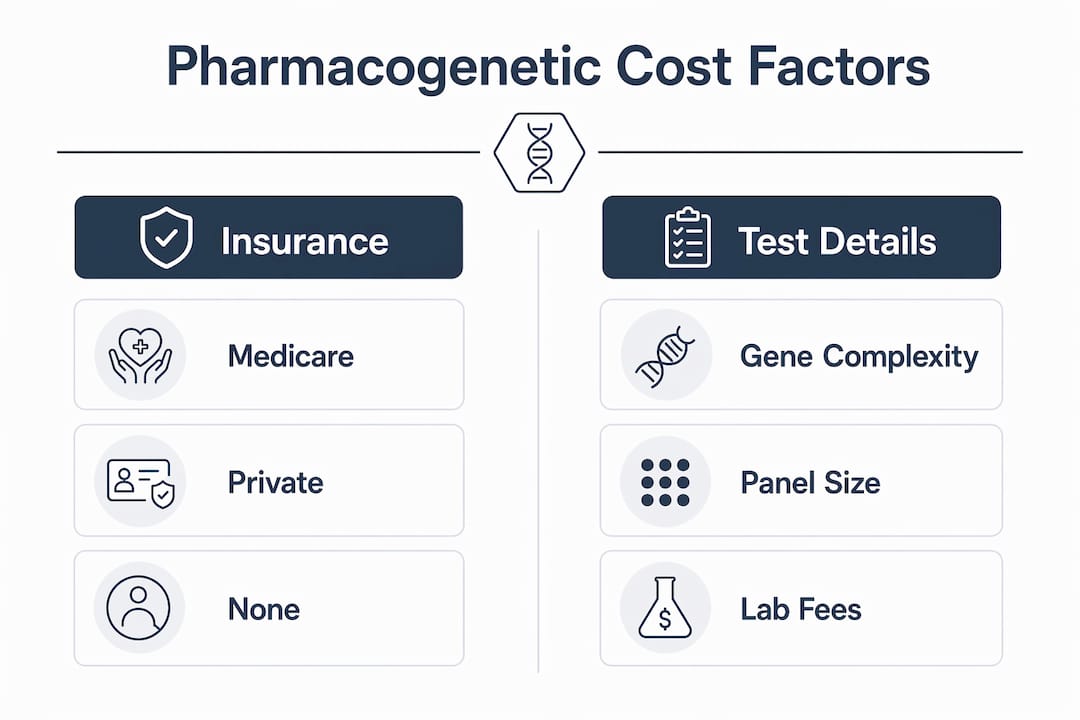
The price you pay depends on several overlapping factors, and no two patients face exactly the same situation. Insurance status is the single biggest variable. Testing method, gene scope, and provider billing practices each add another layer of complexity.
Insurance coverage type
Medicare Part B covers pharmacogenetic testing at $0 out of pocket for tests ordered for clinically actionable drug-gene interactions recognized by FDA or CPIC guidelines. That coverage applies under programs like MolDX, which requires an enrolled provider and qualifying clinical conditions. Commercial insurance is far less predictable. Many insurers classify multi-gene panels as experimental and deny claims outright, leaving patients responsible for the full list price.
Test scope and gene complexity
Single-gene tests cost less than multi-gene panels. Comprehensive CYP2D6 testing drives costs higher because the gene contains structural variants that require specialized lab work beyond standard sequencing. A panel covering dozens of genes across drug classes like antidepressants, antipsychotics, and pain medications will carry a higher list price than a focused single-drug test.

Lab fees versus provider visit costs
The genetic test itself is only part of the total bill. Follow-up appointments and genetic counseling are billed separately and can add meaningful expense to the overall cost. Patients often overlook these secondary charges when budgeting for testing.
Here is a summary of the main cost drivers:
- Insurance type: Medicare patients often pay $0; uninsured patients may pay $150–$600 on average
- Test complexity: Single-gene tests cost less; multi-gene panels with CYP2D6 analysis cost more
- Provider billing: Large clinics handle prior authorization in-house; smaller practices may shift that work to the patient
- Ancillary services: Genetic counseling and follow-up visits are billed separately from the test fee
- Lab certification: CLIA-certified clinical labs charge more than consumer-grade services, but their results are clinically actionable
Pro Tip: Ask the ordering provider to confirm the specific CPT codes for your test before it is submitted. Knowing the codes lets you call your insurer directly and get a coverage determination in writing.
Is pharmacogenetic testing covered by insurance?
Coverage depends on who your insurer is and what clinical evidence they require. The answer is not a simple yes or no.
Medicare Part B provides the clearest path to $0 cost. The test must be ordered by a Medicare-enrolled provider, the patient must have a qualifying condition, and the drug-gene interaction must be recognized by the FDA or CPIC guidelines. When all three criteria are met, coverage under MolDX applies and the patient pays nothing out of pocket.
Commercial insurance is a different story. Payers require proof of medical necessity and often apply inconsistent standards across health plans. A test covered by one employer-sponsored plan may be denied by another. Medicaid coverage varies by state, and many state programs have not yet adopted formal PGx coverage policies.
Follow these steps before your test is ordered:
- Call your insurer’s member services line and ask specifically whether pharmacogenomic testing is covered under your plan.
- Request a prior authorization number if your plan requires it. Tests submitted without prior authorization are frequently denied.
- Ask your provider’s billing department to confirm the test is being ordered under a covered diagnosis code.
- Get the coverage decision in writing via email or a reference number from the call.
- Check for manufacturer assistance programs if your plan denies coverage or if you are uninsured.
Pro Tip: Insurers evaluate medical necessity based on the specific medication being prescribed, not just the test itself. Your provider’s order should name the drug and the clinical reason for testing to strengthen the coverage case.
How to manage out-of-pocket costs and financial assistance
Even when insurance falls short, patients have real options for reducing what they pay.
Manufacturer assistance programs are the most direct route to lower costs. Clinical-grade panels carry list prices above $2,000, but manufacturer programs cap patient out-of-pocket fees at approximately $330 for self-pay patients on certain tests. Income-based assistance can reduce that figure further for qualifying individuals. These programs are worth contacting before assuming the full list price applies to you.
Patients who already have raw DNA data from a consumer ancestry service face a much lower barrier. Reusing raw DNA data for pharmacogenetic insights costs around $59 as a one-time fee. That figure is informational rather than clinical-grade, meaning it cannot replace a physician-ordered CLIA-certified test for treatment decisions. However, it can help a patient start an informed conversation with their provider before committing to a full clinical panel.
Patients who discuss cost expectations with their provider before the test is ordered are far less likely to face surprise bills. Providers at larger clinics often have billing staff who handle prior authorization, while smaller practices may rely on the patient to verify coverage independently.
Additional costs to budget for include:
- Genetic counseling sessions: These are billed separately and help patients interpret results in the context of their full medication list.
- Follow-up provider visits: A results consultation with your prescribing physician adds to the total expense.
- Repeat testing: If your medication regimen changes significantly, some providers recommend updated panels.
Healthcare providers’ billing capacity varies widely. Patients at smaller practices should proactively ask who handles prior authorization and whether the clinic has experience submitting PGx claims to their specific insurer.
Is pharmacogenetic testing worth the cost?
The upfront price is only one part of the financial picture. The long-term value of avoiding the wrong medication is substantial.
71.1% of economic evaluation studies conclude that pharmacogenetic testing is cost-effective when applied to appropriate drug-gene pairs. That figure comes from a systematic review of 211 unique studies, making it one of the broadest assessments of PGx economic value available. Cost-effectiveness was strongest when testing guided prescribing for high-risk medications with well-documented gene interactions.
Preventing adverse drug events is the primary economic driver. Tests show higher cost-utility when applied to medications where genotype-guided alternatives exist and where the cost of a bad drug reaction is high. Antidepressants, antipsychotics, and certain pain medications fall into this category. A single avoidable hospitalization from a drug reaction can cost far more than the test that would have prevented it.
| Benefit category | Clinical and economic impact |
|---|---|
| Adverse drug event prevention | Reduces hospitalizations and emergency visits linked to poor drug metabolism |
| Trial-and-error reduction | Fewer failed medication attempts means lower total treatment cost |
| Guideline alignment | FDA and CPIC-recognized interactions strengthen insurer coverage arguments |
| Long-term medication fit | Patients stay on effective medications longer, reducing downstream care costs |
| Cost-effectiveness evidence | 71.1% of studies confirm economic value for appropriate drug-gene pairs |
FDA and CPIC guidelines play a direct role in insurer decisions. Tests aligned with recognized guidelines are more likely to receive coverage approval. They also give providers a stronger clinical justification when submitting prior authorization requests.
Key Takeaways
Pharmacogenetic testing costs range from $0 to over $2,000 depending on insurance coverage, test scope, and whether financial assistance programs apply.
| Point | Details |
|---|---|
| Cost range is wide | Out-of-pocket costs run from $0 with Medicare to $2,000+ without insurance or assistance. |
| Insurance varies significantly | Medicare Part B covers qualifying tests at $0; commercial plans are inconsistent and often require prior authorization. |
| Assistance programs exist | Manufacturer programs cap self-pay costs at around $330 for certain clinical panels. |
| Raw DNA data is a low-cost option | Reusing ancestry test data costs around $59 but is informational only, not clinical-grade. |
| Long-term value is documented | 71.1% of economic studies confirm cost-effectiveness for appropriate drug-gene pairs. |
My take on navigating PGx costs in Madera
Patients in Madera often assume their doctor’s office handles all the insurance legwork. That assumption costs people money.
The single most useful thing you can do before any pharmacogenetic test is ordered is call your insurer yourself. Ask specifically about the CPT codes your provider plans to submit. Insurers evaluate medical necessity at the claim level, not the test category level, and a vague order can trigger a denial that a more specific one would have passed. I have seen patients avoid hundreds of dollars in unexpected bills simply by making that one phone call.
The financial assistance programs are genuinely underused. Most patients do not know that manufacturer programs exist until after they receive a bill. Asking about assistance before the test is ordered puts you in a much stronger position. The $330 self-pay cap on certain panels is a real number, not a promotional figure, and it applies regardless of income for self-pay patients.
The upfront cost conversation also matters for long-term planning. A test that costs $330 today can prevent months of trial-and-error prescribing that costs far more in co-pays, provider visits, and lost productivity. That math is worth doing before you decide whether testing fits your budget.
— Krunal
Eivdiagnostics and affordable pharmacogenomic testing options
Patients near Madera looking for accessible, transparent testing have a practical option close by.
Eivdiagnostics is an independent pathology laboratory in Fresno, CA, offering molecular pathology services that include PCR-based genetic analysis relevant to pharmacogenomic testing. The lab works directly with patients, providers, and self-pay customers, so you do not need a referral to get started. Transparent pricing and self-pay testing options mean you know what you owe before the test is run. Eivdiagnostics also offers mobile phlebotomy, bringing sample collection to your home or office so you skip the clinic visit entirely. Contact Eivdiagnostics directly to get a personalized cost estimate based on your insurance status and the specific test your provider recommends.
FAQ
What is pharmacogenetic testing?
Pharmacogenetic testing is a type of genetic analysis that identifies how a patient’s genes affect their response to specific medications. Results guide prescribers toward drugs and doses that are more likely to work safely for that individual.
How much does pharmacogenetic testing cost without insurance?
Without insurance, out-of-pocket costs typically range from $150 to $600 on average, though clinical panel list prices can exceed $2,000. Manufacturer assistance programs cap self-pay costs at around $330 for certain tests.
Is pharmacogenetic testing covered by Medicare?
Medicare Part B covers qualifying pharmacogenetic tests at $0 out of pocket when ordered by a Medicare-enrolled provider for a clinically recognized drug-gene interaction under programs like MolDX.
Where can I get pharmacogenetic testing near Madera?
Eivdiagnostics, located in Fresno, CA, offers molecular pathology and self-pay testing options accessible to patients in Madera, including mobile phlebotomy for at-home sample collection.
How accurate is pharmacogenetic testing?
CLIA-certified clinical-grade pharmacogenetic tests are highly accurate for the specific gene variants they analyze. Consumer-grade raw DNA reanalysis services are informational and not validated for clinical treatment decisions.