
July 25, 2026
PCR vs Rapid Test: Which COVID Test Is Right for You?
Confused about PCR vs rapid test? Discover which COVID-19 test delivers the best accuracy, speed, and setting for your needs.
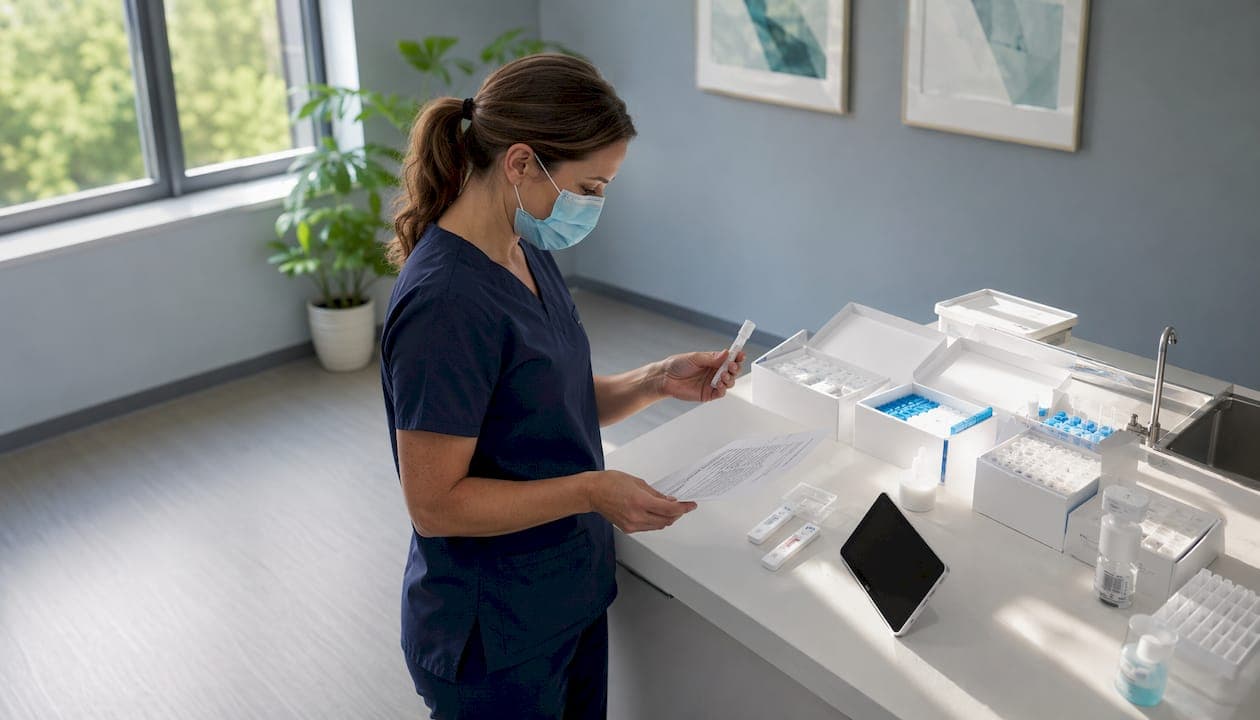
PCR tests and rapid antigen tests are the two main tools for diagnosing COVID-19, and they work in fundamentally different ways. A PCR (polymerase chain reaction) test is a nucleic acid amplification test that detects viral RNA from a nasal or saliva sample in a laboratory setting. It is the gold standard for accuracy. A rapid antigen test detects viral proteins using lateral flow technology and delivers results in 15–30 minutes, usually at home or in a clinic, but with lower sensitivity.
Here is the short version of how they compare:
- Accuracy: PCR is more sensitive and specific; antigen tests carry a higher risk of false negatives, especially in asymptomatic individuals
- Speed: Rapid antigen tests return results quickly, typically within minutes; PCR testing generally takes a longer time, often days.
- Setting: Antigen tests work at home or point-of-care; PCR requires a certified laboratory
- Cost: Rapid tests are generally less expensive and widely available over the counter
- Best use: PCR for confirmation and high-stakes decisions; rapid tests for quick screening and triage
Pro Tip: If your rapid antigen test comes back negative but you have symptoms, do not stop there. Serial antigen testing — repeating the test at least twice, 48 hours apart — significantly reduces the chance of missing an active infection. A single PCR test can replace this entire repeat-testing protocol.
Table of Contents
- When should you test for COVID-19?
- How PCR tests work, and where they fall short
- How rapid antigen tests work, and where they fall short
- Choosing between PCR and rapid tests: what actually drives the decision
- What molecular pathology experts want you to know about test accuracy
- How to prepare for each test type
- What to do after you get your results
- Eivdiagnostics brings lab-grade PCR accuracy to Fresno-Visalia patients
- Key Takeaways
- FAQ
When should you test for COVID-19?
Timing matters as much as test type. Testing too early after an exposure is one of the most common reasons for a false negative result. The CDC recommends waiting at least five days after exposure if you have no symptoms, because low viral loads in the first few days make detection unreliable regardless of which test you use.
Testing is recommended in these situations:
- Symptomatic individuals: Test as soon as symptoms appear, regardless of exposure history
- Known exposure, no symptoms: Wait at least five days post-exposure before testing
- Pre-procedure or hospitalization screening: Consult your provider; guidelines vary by clinical setting
- Travel or event requirements: Follow the specific protocol required by the venue or destination
- Ongoing surveillance programs: Serial antigen testing is commonly used in workplace and school settings
The Infectious Diseases Society of America recommends nucleic acid testing for all symptomatic individuals suspected of having COVID-19, and suggests testing for asymptomatic individuals when results will directly affect isolation or quarantine decisions.
How PCR tests work, and where they fall short
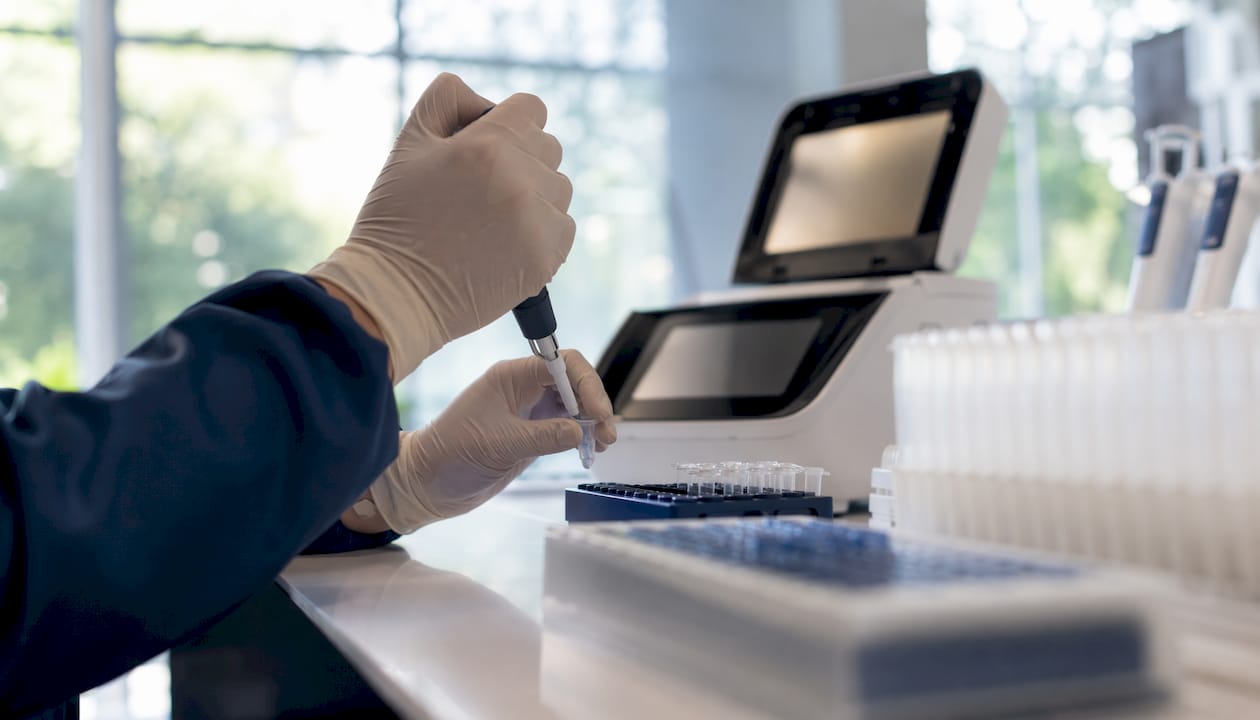
PCR detects viral RNA by amplifying tiny genetic fragments from a nasal swab or saliva sample through repeated heating and cooling cycles. Even trace amounts of viral material become detectable. That sensitivity is why laboratory-based PCR is considered the gold standard for confirming COVID-19 infection and why it is preferred when test results will drive major clinical decisions.
Benefits of PCR testing:
- Highest sensitivity and specificity among available COVID-19 tests
- Reliable across SARS-CoV-2 variants due to RNA-level detection
- Used for confirmatory diagnosis when antigen results are discordant
- Nasal swab specimens are preferred; CDC does not recommend saliva for confirmation
Drawbacks of PCR testing:
- Results typically take 1–3 days, limiting use in urgent triage
- Requires a certified laboratory; not available for immediate point-of-care use
- Higher cost compared to over-the-counter antigen tests
- PCR can detect viral RNA for up to 90 days after infection, meaning a positive result does not always indicate active, contagious disease
That last point catches people off guard. Someone who recovered from COVID-19 two months ago can still test PCR-positive, even though they pose no transmission risk. For this reason, PCR is not recommended for individuals who already tested positive within the past 90 days.
How rapid antigen tests work, and where they fall short
Rapid antigen tests use lateral flow immunoassay technology to detect nucleocapsid proteins on the surface of the SARS-CoV-2 virus. You swab your nose, apply the sample to a test strip, and a visible line appears within 15–30 minutes. No lab equipment required. The FDA has authorized dozens of these tests for over-the-counter home use, including options from iHealth Labs, OraSure Technologies, and ACON Laboratories.
Benefits of rapid antigen testing:
- Results in 15–30 minutes, supporting fast clinical decisions
- Inexpensive and available without a prescription at most pharmacies
- Effective for symptomatic individuals tested within the first five days of symptom onset
- Useful for serial screening programs in schools, workplaces, and clinics
Drawbacks of rapid antigen testing:
- Lower sensitivity than PCR, particularly in asymptomatic individuals or early infection
- A single negative result does not rule out COVID-19
- FDA recommends repeating a negative antigen test at least once more, 48 hours later, to reduce false negatives
- Sensitivity decreases beyond the first five days of symptom onset
The FDA’s guidance is direct: a negative antigen result is presumptive, not definitive. If you have symptoms and test negative, treat it as a reason to test again, not a reason to stop.
Choosing between PCR and rapid tests: what actually drives the decision
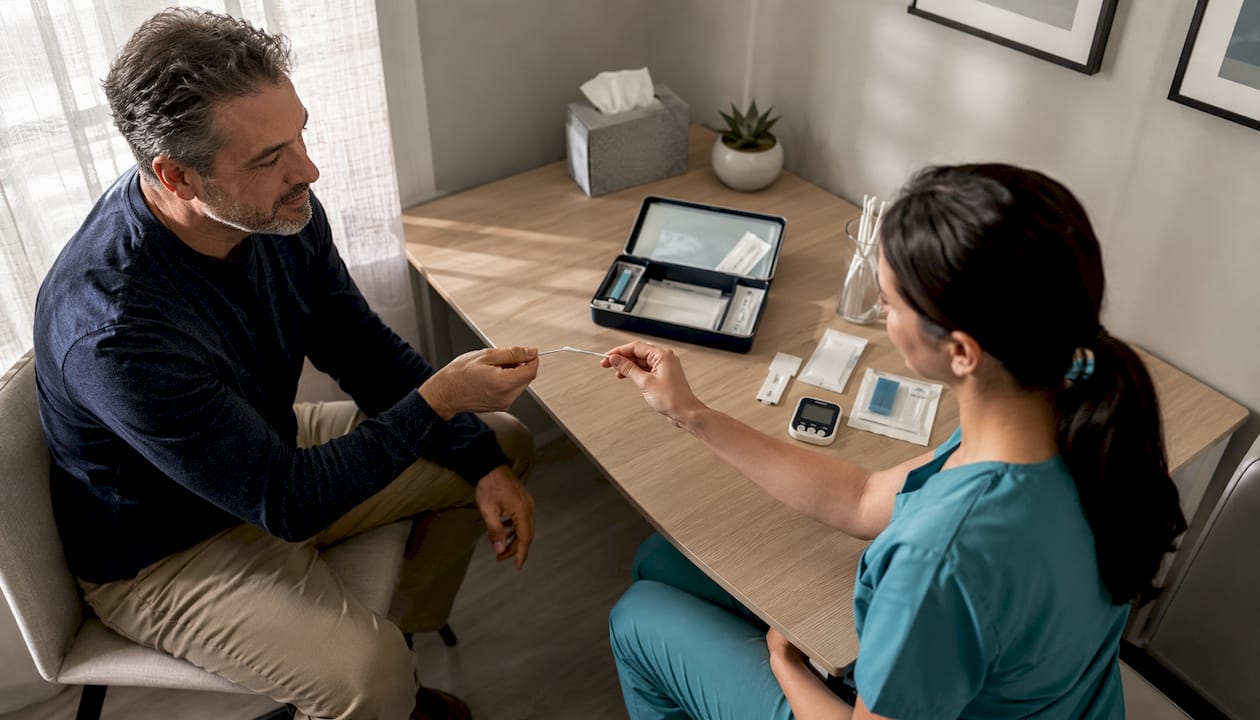
The right test depends on what you need the answer for and how fast you need it. Balancing speed and sensitivity is the core clinical challenge, and there is no single answer that fits every situation.
Choose PCR when:
- You need a confirmed diagnosis for medical treatment decisions
- You are immunocompromised or high-risk and a false negative carries serious consequences
- A rapid antigen test came back negative but symptoms persist
- You are being screened for a procedure or hospital admission
Choose a rapid antigen test when:
- You need results quickly for triage or isolation decisions
- You are symptomatic and within the first five days of onset
- Cost or accessibility is a limiting factor
- You are participating in a serial screening program
Pro Tip: The two tests work well together. Use a rapid antigen test for immediate screening, then follow up with PCR if the result is negative and clinical suspicion remains high. This combination captures most active infections without the wait of starting with PCR.
For patients in Fresno-Visalia, affordable lab testing options are available locally, which removes one of the traditional barriers to accessing PCR confirmation.
What molecular pathology experts want you to know about test accuracy
Not all molecular tests perform equally. Laboratory-based NAATs consistently outperform point-of-care NAATs and antigen tests in head-to-head sensitivity comparisons. When test results conflict, lab-based PCR takes precedence as the confirmatory standard.
Eivdiagnostics, an independent pathology laboratory in Fresno, CA, employs board-certified pathologists and uses advanced PCR technology to support both providers and direct-to-consumer patients. Key expert perspectives on test accuracy include:
- Serial antigen testing reduces false negatives but does not eliminate them; PCR remains the definitive tool for discordant or high-stakes results
- Viral variant evolution can affect antigen test performance more than PCR, since antigen tests target specific surface proteins that may mutate
- Sample collection technique matters: an improperly collected nasal swab produces unreliable results regardless of test type
- Point-of-care NAATs offer faster turnaround than lab-based PCR but still fall below lab-based sensitivity benchmarks
- Patients who tested positive in the past 90 days should not use PCR to confirm re-infection; clinical evaluation and antigen testing are more appropriate in that window
For providers managing complex cases or patients needing rapid, reliable molecular results, Eivdiagnostics offers molecular pathology services with fast turnaround and direct clinical support. You can also connect with a provider through NexoLab to get a consultation before ordering a test.
How to prepare for each test type
Preparation is simple but skipping it affects accuracy.
For a PCR test: Avoid eating, drinking, or using nasal sprays for at least 30 minutes before sample collection. If you are having a nasal swab collected at a lab or clinic, no special preparation is required beyond that. For saliva-based PCR, follow the specific collection instructions provided, as timing and technique vary by kit.
For a rapid antigen test: Do not eat, drink, smoke, or brush your teeth for at least 30 minutes before testing. Read the full instructions before opening the kit. Use the swab exactly as directed — anterior nares collection means swabbing just inside each nostril, not deep into the nasal passage. Let the test sit for the full time indicated before reading results; checking early increases the chance of misreading a faint line.
Store unused rapid test kits at room temperature and check the expiration date before use. Expired tests may produce unreliable results.
What to do after you get your results
Positive result (either test type): Isolate from others immediately. Contact your healthcare provider, especially if you are at high risk for severe illness. Antiviral treatments like Paxlovid are time-sensitive, so do not wait to seek care. Report your result as directed by your provider or local health authority.
Negative rapid antigen result with symptoms: Test again in 48 hours. If the second test is also negative and symptoms continue, get a PCR test. A negative antigen result does not rule out infection when clinical signs are present.
Negative PCR result: A negative PCR result is highly reliable. If symptoms persist despite a negative PCR, your provider may evaluate for other respiratory illnesses such as influenza or RSV.
Positive PCR result after recent infection: If you tested positive within the past 90 days, a new PCR positive may reflect residual RNA rather than active re-infection. Discuss this with your provider before making isolation decisions.
For patients in Clovis and the broader Fresno area, fast PCR results are available locally without a long wait.
Eivdiagnostics brings lab-grade PCR accuracy to Fresno-Visalia patients
Rapid tests give you speed. What Eivdiagnostics gives you is certainty. As an independent pathology lab in Fresno, CA, Eivdiagnostics offers laboratory-based PCR testing with the sensitivity and board-certified oversight that over-the-counter antigen tests simply cannot match. No referral required. Patients can order directly, with or without insurance, and providers can submit orders for their most complex cases.
The lab also offers mobile phlebotomy services, sending a trained phlebotomist to your home or office for sample collection. That means you get lab-grade accuracy without leaving your house. For patients managing symptoms, high-risk conditions, or inconclusive rapid test results, this is the practical next step. Visit Eivdiagnostics’s lab test packages to see current options and book your test today.
Key Takeaways
PCR testing is the gold standard for COVID-19 diagnosis, offering higher sensitivity than rapid antigen tests, which are best used for fast screening with serial testing to reduce false negatives.
| Point | Details |
|---|---|
| PCR is the gold standard | Laboratory-based PCR detects viral RNA with the highest sensitivity and confirms discordant results. |
| Rapid tests need serial testing | A single negative antigen result does not rule out COVID-19; repeat testing 48 hours apart reduces false negatives. |
| Timing affects accuracy | Testing too early after exposure risks false negatives; wait at least five days if asymptomatic. |
| PCR can stay positive 90 days post-infection | Residual viral RNA may trigger a positive PCR result even when the patient is no longer contagious. |
| Eivdiagnostics for confirmed results | Eivdiagnostics provides board-certified, lab-based PCR testing in Fresno with mobile phlebotomy and direct patient access. |
FAQ
Is PCR testing better than rapid testing?
PCR is more accurate. Laboratory-based PCR has higher sensitivity than antigen tests and is the preferred method for confirming COVID-19 when results will drive clinical decisions. Rapid tests are better when speed matters more than maximum accuracy.
Is there a rapid PCR test?
Yes. Point-of-care NAATs can return results faster than standard lab-based PCR. However, they still fall below the sensitivity of full laboratory-based PCR processing, which remains the confirmatory benchmark.
What is the difference between a rapid COVID test and a PCR test?
A rapid antigen test detects viral proteins and returns results in 15–30 minutes with lower sensitivity. A PCR test detects viral RNA in a certified lab, takes 1–3 days, and is significantly more accurate, especially for asymptomatic individuals or early-stage infection.
Do PCR tests work for COVID?
Yes. PCR is the gold standard for SARS-CoV-2 detection and works across variants. One caveat: PCR can detect residual viral RNA for up to 90 days after infection, so a positive result in a recently recovered patient does not necessarily mean active, contagious disease.
Recommended
- Fast Testing Results: What Patients in Clovis Need to Know | EIV Diagnostics | EIV Diagnostics
- Lab Test Packages | EIV Diagnostics | EIV Diagnostics
- Top 3 Alternatives to Quest Diagnostics Providers 2026 | EIV Diagnostics | EIV Diagnostics
- Top 4 Affordable Lab Testing Providers 2026 | EIV Diagnostics | EIV Diagnostics