
August 24, 2026
What to Know About Blood Draw Complications and Warning Signs
Learn how to identify and manage blood draw complications. Recognize warning signs and ensure a safer experience during and after your draw.
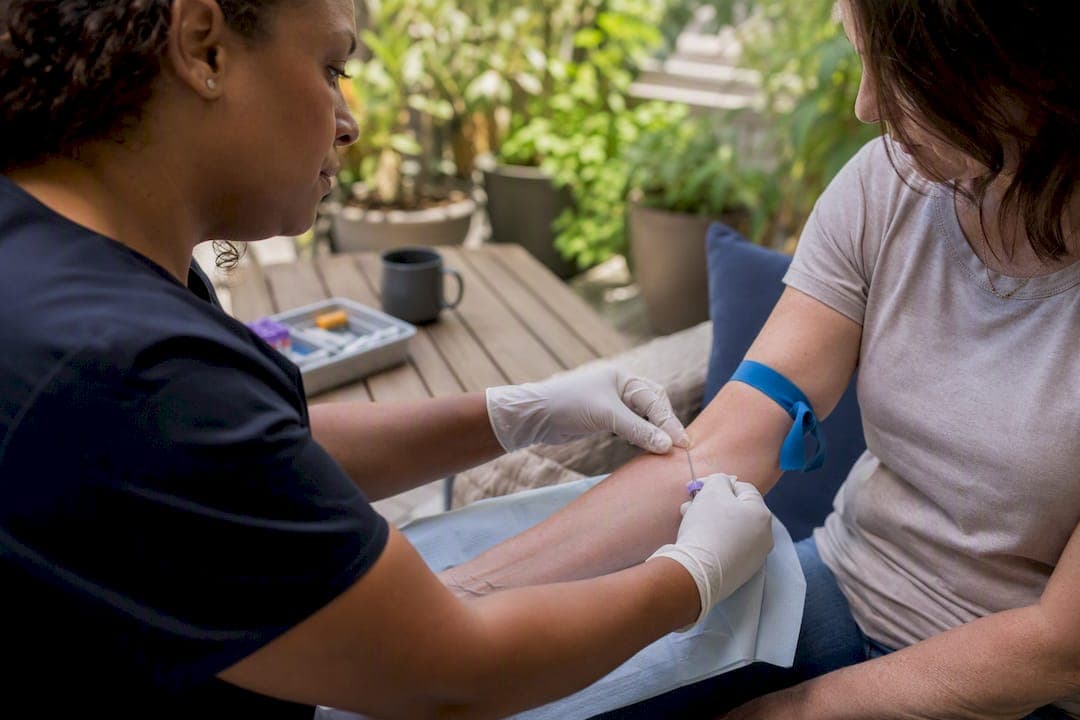
Most people who get a blood draw walk away with nothing more than a small bruise. The complications that actually matter, in order of how often they show up, are hematoma (bruising), vasovagal fainting, nerve irritation, arterial puncture, and infection. Serious events are uncommon, and the WHO/NCBI phlebotomy guidance makes clear that correct technique prevents the majority of them before they start.
If something feels wrong during or after a draw, the first move is always the same: stop, apply firm direct pressure over the site, and raise your arm above heart level. Avoid ibuprofen or aspirin for the first 72 hours if bleeding or bruising shows up, since both drugs thin blood further; acetaminophen is the safer choice for pain in that window.
Seek medical attention if you notice any of these red flags:
- A hematoma that keeps expanding rather than settling
- Sharp, shooting, or electric pain radiating down the arm
- Numbness or tingling that lasts beyond a day
- Bleeding that won’t stop after 5 to 10 minutes of firm pressure
- Fever, spreading redness, or pus at the puncture site
EIV Diagnostics, an independent pathology laboratory serving patients and providers with mobile phlebotomy and lab services, trains its collection staff on these exact protocols. So does every hospital system that follows Cleveland Clinic’s published guidance on venous injury.
Key Takeaways
Most blood draw complications are minor, self-limited, and preventable with correct technique and prompt patient action at the first sign of trouble.
| Point | Details |
|---|---|
| Pressure stops most problems | Firm direct pressure for 2 to 5 minutes prevents or limits nearly every bleeding-related complication. |
| Know the red flags | Expanding hematoma, shooting nerve pain past 72 hours, or bleeding past 10 minutes needs medical attention. |
| Skip NSAIDs early on | Use acetaminophen instead of ibuprofen or aspirin for the first 72 hours if bruising occurs. |
| Disclosure changes outcomes | Telling staff about anticoagulants, fainting history, or fistulas before the draw prevents avoidable complications. |
| Technique drives lab accuracy | Improper collection technique causes 60 to 70 percent of preanalytical laboratory errors. |
This article is general information, not a substitute for advice from a qualified doctor. Consult a qualified healthcare professional about your own circumstances before acting on anything here.
Table of Contents
- Hematoma and Bruising: Causes, Signs, and Immediate Care
- Nerve Injury: Warning Signs and How Long Recovery Takes
- Vasovagal Reactions: Why People Faint and How to Prevent It
- Arterial Puncture: Recognizing It and Stopping the Bleeding
- Infection at the Puncture Site: Signs and What to Do
- Other Draw Problems: Collapsed Veins, Petechiae, and Sample Errors
- What Happens During a Clinical Evaluation for a Complication
- How to Prevent Blood Draw Complications Before They Start
- How Long Recovery Takes and When to Follow Up
- How Clinical Quality Reduces Blood Draw Risk
- Why the Standard Blood Draw Advice Misses the Point
- Sources
- FAQ
Hematoma and Bruising: Causes, Signs, and Immediate Care
A hematoma, the purple-blue bruise that shows up under the skin after a draw, happens when blood leaks out of the vein into surrounding tissue instead of staying inside the needle track. It’s the single most common complication of venipuncture, and it usually traces back to one of three technical issues: the needle passed through the far wall of the vein, the tourniquet stayed on too long, or pressure wasn’t applied long enough after the needle came out.
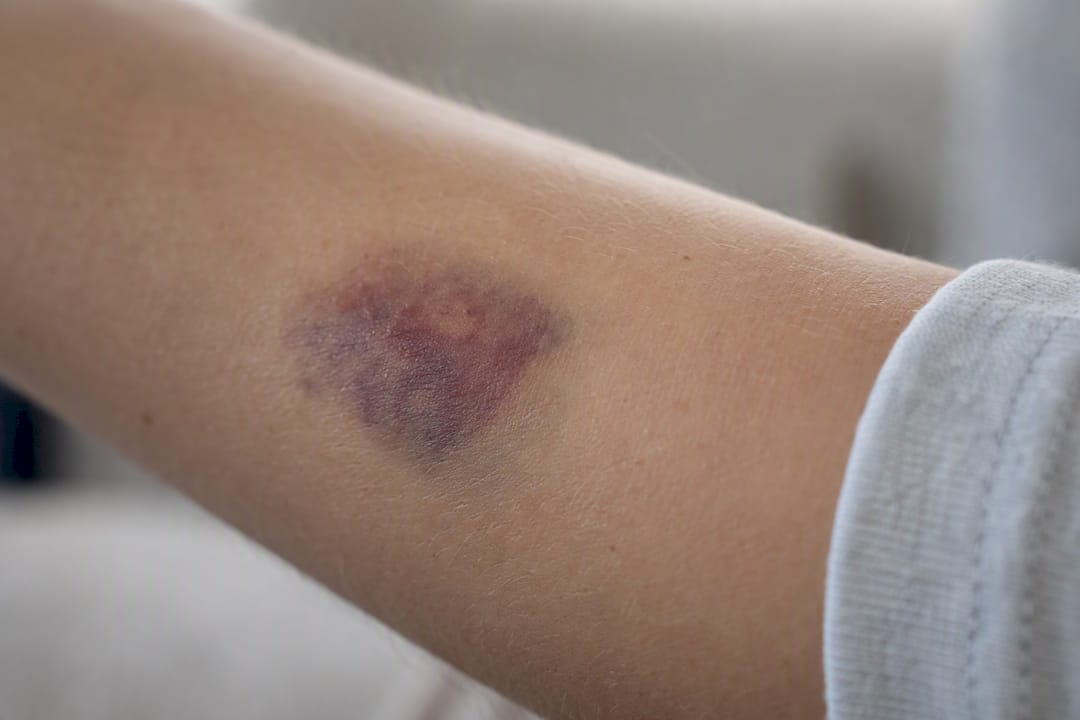
Watch for swelling that keeps growing, discoloration that spreads rather than fades, or pain that feels disproportionate to a bruise. Most hematomas peak in size within the first day and then start shrinking.
Here’s what to do the moment you notice one forming, including expert advice on how to heal bruises faster and support tissue recovery:
- Remove or ask staff to remove the tourniquet immediately if it’s still on.
- Apply firm, direct pressure to the site for at least 2 minutes. If you take blood thinners, hold longer, sometimes 5 minutes or more.
- Keep the arm elevated above heart level for the next 10 to 15 minutes.
- Use a cold compress for the first 24 to 48 hours to limit swelling.
- Switch to a warm compress after 48 hours to encourage the trapped blood to reabsorb.
- Take acetaminophen rather than NSAIDs for discomfort in the first 72 hours, since aspirin and ibuprofen increase bleeding risk during that window.
Pro Tip: Keep your arm straight and avoid lifting anything heavy with that hand for a few hours. Bending the elbow repeatedly right after a draw is one of the most common reasons a small bruise turns into a large one.
Call a clinician if the hematoma keeps growing after the first 24 hours, if pain feels severe rather than mild, or if swelling hasn’t started improving after a week. According to Cleveland Clinic, a typical blown vein heals within about 10 to 12 days with nothing more than rest and cold or warm compresses. It sounds worse than it is.
Nerve Injury: Warning Signs and How Long Recovery Takes
Normal needle pain feels like a brief pinch or pressure. Nerve contact feels different, and you’ll usually know it right away: a sudden electric or shooting sensation that shoots down the forearm, sometimes reaching the fingers, often paired with tingling or numbness that lingers after the needle comes out.
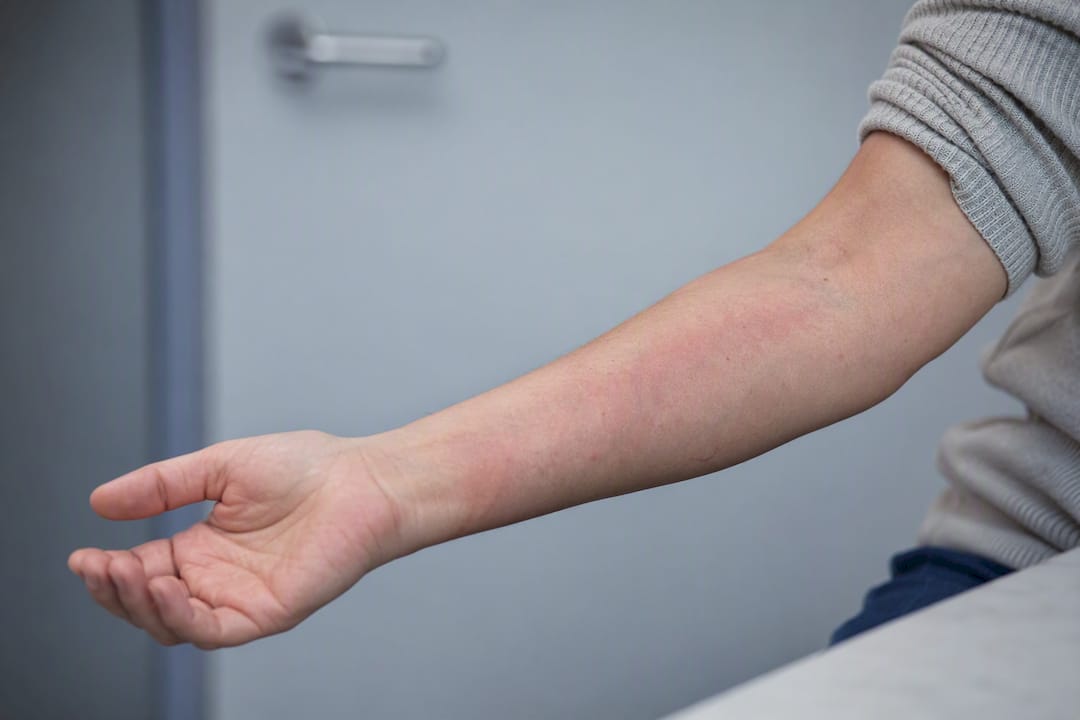
If that happens during your draw, speak up immediately. The collector should stop, withdraw the needle right away, and avoid probing around for the vein at the same site. Re-inserting or angling the needle after a nerve hit raises the risk of further irritation.
What tends to happen next:
- Most minor nerve irritations settle within 24 hours without any lasting effect, according to a peer-reviewed review of phlebotomy-related nerve injury.
- Tingling or mild numbness that persists a day or two is still within the range of normal healing.
- Symptoms that worsen, spread, or last beyond 72 hours warrant an evaluation by a physician, since persistent nerve deficits, while uncommon, can require referral to a neurologist.
Document what happened. Note which arm, roughly where the needle went in, and what the sensation felt like. That detail matters if you end up seeing a doctor later, because it helps them distinguish a nerve irritation that’s already resolving from one that needs imaging or a nerve conduction study.
Vasovagal Reactions: Why People Faint and How to Prevent It
Fainting during a blood test, medically called a vasovagal reaction, isn’t about weakness. It’s a nervous system response where blood vessels suddenly widen and heart rate drops, often triggered by anxiety, pain, or standing too long during the draw. Needle phobia and blood draw anxiety are two of the strongest predictors.
The warning signs arrive before the faint itself: lightheadedness, nausea, sweating, ringing ears, or a wave of pale, clammy skin. If you notice any of that during a draw, tell the phlebotomist immediately.
Here’s how to manage it, before and during:
- Mention any history of fainting or needle phobia before the draw starts, not after.
- Sit in a reclined position or lie down for the procedure if you’ve fainted before.
- Stay hydrated beforehand; low blood volume makes vasovagal reactions more likely.
- Use slow, deep breathing or look away from the needle to reduce the anxiety trigger.
- If symptoms start, tell staff right away so the needle can come out before you actually faint.
If fainting does occur, staff should recline the chair or lay you flat with legs elevated, loosen any tight clothing, and monitor you until you’re fully alert. Most people recover within a minute or two. Seek emergency care only if unconsciousness lasts more than a minute or two, if you hit your head on the way down, or if chest pain or irregular heartbeat accompanies the episode.
Arterial Puncture: Recognizing It and Stopping the Bleeding
An arterial puncture happens when the needle goes past the vein and hits an artery instead, usually because the vessel sits deeper or closer to an artery than expected. You’ll notice it fast: the blood is bright red rather than dark, it fills the tube far quicker than a normal draw, and a hematoma can balloon within seconds.
This is one of the few blood draw complications that calls for urgent, not just careful, action.
- Stop the draw and remove the needle immediately.
- Apply firm, continuous pressure directly over the site for at least 5 minutes, longer if bleeding hasn’t stopped.
- Stay at the facility until a staff member confirms the bleeding has fully controlled, not just slowed.
- Watch for a rapidly expanding hematoma or a pulsing feeling at the site, both signs that pressure hasn’t worked and you need urgent evaluation.
Pro Tip: If you take a blood thinner like warfarin, apixaban, or clopidogrel, mention it before the draw starts, not after. Patients on anticoagulant or antiplatelet therapy often need pressure held for twice as long, and staff should already know to plan for that.
Anyone on anticoagulants who experiences an arterial puncture should contact the prescribing clinician the same day, even if bleeding stops normally, just to flag the event on record.
Infection at the Puncture Site: Signs and What to Do
Infection after a blood draw is rare when standard skin prep is followed, but it’s worth knowing what it looks like since the site remains an open wound for a short time. Watch for redness that spreads rather than stays contained, warmth around the site, pus or cloudy drainage, or a fever that develops within hours to a few days of the draw.
Risk climbs with a few specific factors:
- Skin prep that wasn’t given time to dry (70% isopropyl alcohol needs a few seconds to work before the needle goes in)
- A weakened immune system from chemotherapy, transplant medication, or chronic illness
- Repeated draws at the same site over a short period
- Poor site hygiene in the hours after the draw, including touching or scratching the area
Keep the bandage on and the site dry for several hours after the draw. If redness, swelling, or drainage shows up, call your clinician rather than waiting it out. Cellulitis that’s spreading, or any fever above 100.4°F tied to the site, needs same-day medical attention. Left untreated, a localized infection can occasionally progress to an abscess requiring drainage or a short course of antibiotics.
Other Draw Problems: Collapsed Veins, Petechiae, and Sample Errors
Not every blood draw complication involves pain or visible injury. Some affect whether the sample itself is usable.
- Collapsed veins happen when a vein narrows or flattens under vacuum pressure, usually in patients with small, fragile, or scarred veins. Experienced collectors switch to a butterfly needle, a smaller gauge, or a manual syringe draw with slow plunger withdrawal to work around it.
- Petechiae, the tiny red pinpoint dots that sometimes appear around the site, come from a tourniquet left on too long or wrapped too tight. They’re harmless and fade on their own within a few days.
- Hemolysis and microclotting happen when red blood cells rupture during collection, often from a needle gauge that’s too small, vigorous shaking of the tube, or a slow, difficult draw. Preanalytical errors like these account for 60 to 70 percent of all laboratory errors, and they’re the single biggest reason a lab calls to request a redraw.
None of these require treatment, but they’re worth knowing about if a lab asks you to come back for a second sample.
What Happens During a Clinical Evaluation for a Complication
If you do see a clinician about a blood draw complication, the visit is usually quick and focused. Expect a neurovascular check, meaning they’ll test grip strength, sensation, and pulse in the affected arm, along with a visual inspection of the site and a measurement of any hematoma to track whether it’s growing or shrinking.
- Persistent or worsening nerve symptoms may prompt a referral for nerve conduction studies or, less often, imaging.
- A suspected deep hematoma or vascular injury may call for an ultrasound to rule out clot formation or arterial damage.
- Signs of infection typically lead to a wound culture or basic bloodwork before starting antibiotics.
- If a healthcare worker was exposed to blood during the incident, standard occupational exposure protocols and incident reporting apply, separate from the patient’s own care.
Bring notes on when symptoms started and how they’ve changed since. That timeline often matters more to the clinician than the physical exam itself.
How to Prevent Blood Draw Complications Before They Start
Prevention runs in two directions: what you do as the patient, and what the person drawing your blood does on their end. Both matter.
Before your appointment:
- Stay hydrated for a day or two beforehand. Well-hydrated veins are easier to access and less likely to collapse.
- Disclose all medications, especially anticoagulants, antiplatelets, and supplements like fish oil that thin blood.
- Mention any history of fainting, needle phobia, or difficult draws in the past.
- Flag any fistula, lymphedema, or prior mastectomy on the side being used, since these conditions change where a collector should draw from.
- Avoid heavy lifting or intense exercise with that arm for a few hours after the draw.
What good technique looks like on the collector’s side, per WHO and NCBI best-practice standards: choosing the correct needle gauge for the vein size, keeping the tourniquet on for under one minute, letting alcohol prep dry fully before insertion, releasing the tourniquet before withdrawing the needle, and holding adequate pressure afterward rather than rushing to the next patient.
Pro Tip: If you’ve had trouble with draws in the past, ask for the most experienced phlebotomist available, or consider a service that sends an experienced collector to you. Mobile phlebotomy visits tend to work well for people with difficult venous access, chronic illness, or a history of fainting, since the setting is calmer and the collector isn’t rushing between rooms. Preparing properly for related procedures, like fasting requirements before certain blood tests, also cuts down on the need for a repeat draw.
How Long Recovery Takes and When to Follow Up
Most blood draw complications resolve faster than people expect. A typical hematoma fades over 7 to 14 days, matching Cleveland Clinic’s reported 10 to 12 day window for a blown vein. Minor nerve irritation, the shooting or tingling sensation some people feel, usually settles within 24 hours, sometimes up to 72. Infections, when they occur, follow a less predictable timeline and generally need a course of antibiotics before symptoms clear.
Certain thresholds should prompt a call regardless of how minor the original draw seemed:
- A hematoma still expanding after the first 24 hours
- Neurological symptoms, numbness or shooting pain, that haven’t improved by 72 hours
- Bleeding that continues past 5 to 10 minutes of steady pressure
- Redness, warmth, or drainage that shows up 24 to 48 hours after the draw
Write down when symptoms started and share that timeline with your primary care provider or the clinician who ordered the test. It’s the fastest way to get an accurate read on whether you’re healing normally or need a closer look.
How Clinical Quality Reduces Blood Draw Risk
Technique is the deciding factor in most blood draw complications, and that’s exactly where trained staff earn their keep. EIV Diagnostics employs board-certified pathologists and offers mobile phlebotomy alongside advanced lab technology like PCR and confocal microscopy, giving patients access to a level of clinical rigor that a rushed walk-in draw often can’t match.
Staff trained to WHO and NCBI best-practice standards make fewer of the mistakes that cause complications in the first place:
- Correct needle gauge selection for vein size and condition, lowering hemolysis risk
- Tourniquet timing under one minute, reducing hematoma and petechiae
- Full alcohol-dry time before insertion, cutting infection risk
- Immediate, adequate pressure after withdrawal, the single biggest lever against bruising
Preanalytical errors, mostly hemolysis and microclotting from improper collection technique, account for 60 to 70 percent of all laboratory errors. Getting the draw right the first time isn’t just about comfort. It’s what keeps a diagnosis accurate and avoids a second needle stick altogether.
For patients with a history of difficult draws, chronic illness, or fainting, exploring EIV Diagnostics’s molecular pathology and diagnostic services alongside its mobile phlebotomy option is worth doing before your next appointment, not after a bad one.
Why the Standard Blood Draw Advice Misses the Point
Most patient-facing material on blood draws treats every complication as equally alarming, which does readers a disservice. A bruise and an arterial puncture are not the same category of event, and lumping them together either scares people unnecessarily or, worse, dulls their sense of urgency when something genuinely needs attention.
The real skill isn’t memorizing every possible complication. It’s learning to tell the difference between “this is uncomfortable but normal” and “this needs a phone call today.” A bruise that grows for a day, then plateaus, is normal. A bruise that keeps expanding on day two is not. Tingling that fades by evening is normal. Tingling that’s still there at hour 80 is not.
The other blind spot: patients rarely realize how much of their own disclosure affects outcomes. Mentioning a blood thinner, a fainting history, or a prior mastectomy before the needle goes in changes what the collector actually does. That’s not a footnote. It’s often the single biggest lever a patient controls in the entire visit.
Sources
- Nerve injury during phlebotomy (PMC article)
- Blown Vein — Cleveland Clinic
- Best practice in phlebotomy and blood collection — NCBI / WHO
- How to do venous blood sampling — MSD Manual Professional
FAQ
What is the most common complication of a blood draw?
Hematoma, or localized bruising and swelling, is by far the most common complication, typically resolving within 7 to 14 days with basic care.
How do I know if I have nerve damage from a blood draw?
Nerve injury usually feels like a sudden sharp or electric sensation radiating down the arm, sometimes with tingling or numbness. Most cases resolve within 24 hours, but symptoms lasting beyond 72 hours need a medical evaluation.
How long does it take your body to recover from a blood draw?
A simple draw with no complications typically feels normal within a day. If bruising or a blown vein occurs, expect 10 to 12 days for full healing.
How long will I feel sick after a blood draw?
Vasovagal symptoms like dizziness or nausea usually pass within minutes once you’re seated or lying down. If lightheadedness or weakness continues beyond an hour, contact a clinician to rule out another cause.